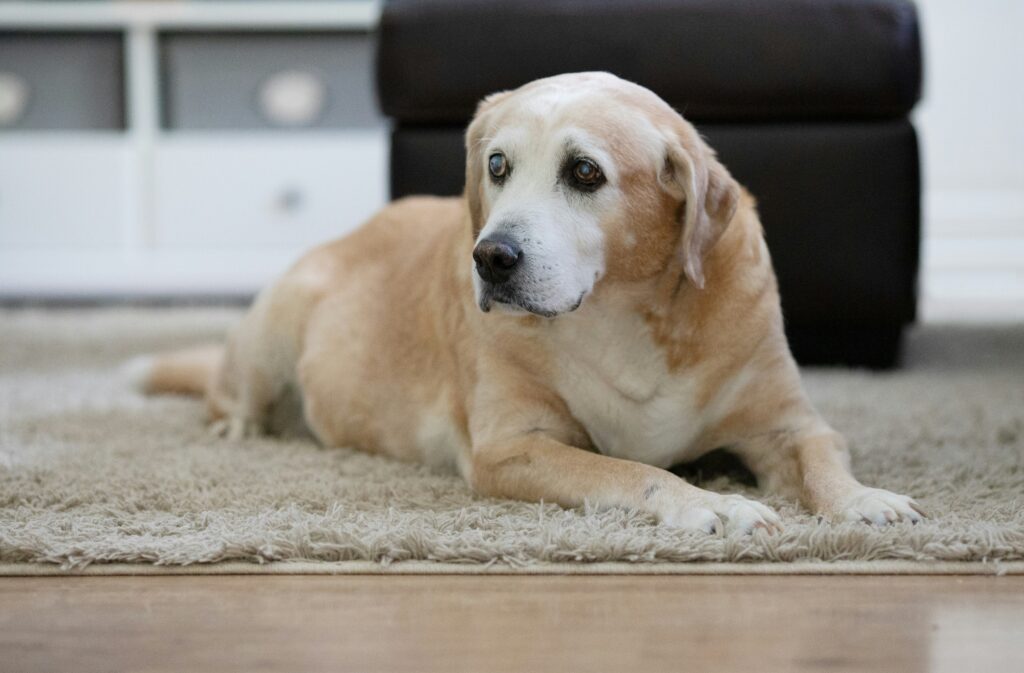
Senior dogs still need daily walks, usually 20-40 minutes total, split into two or more shorter outings on flat ground, with rest breaks and sniffing time built in rather than a fixed pace or distance. What changes with age isn’t whether to walk, it’s how.
Is a Slower Walk Just Age, or Something Else?
Gradual slowing down over months, with no other symptoms, is usually normal aging. A sudden change over days, or slowing paired with other symptoms, is worth a vet visit.
Normal aging generally looks like a gradual preference for sniffing over speed, slightly shorter walks over time, more stops and rest, more sleep overall, and a dog who’s still curious and engaged during walks, just slower.
Talk to your vet if you’re seeing limping or visible discomfort, stiffness after getting up from rest, hesitation at stairs they used to manage fine, a change that showed up over days rather than months, excessive panting, or a dog who refuses to continue a walk they’d normally handle. Any of that paired with a change in appetite, breathing, or bathroom habits is worth a call, not a wait-and-see.
How Long Should a Senior Dog Walk?
Most senior dogs do well with 20-40 minutes of walking total per day, split into two or more shorter sessions rather than one long walk. Dogs with significant arthritis or mobility issues often do better with several 10-15 minute outings instead.
The better gauge than any fixed number is how your dog looks afterward. Settled and comfortable means the length was about right. Stiff or reluctant next time out means to dial it back.
Things that help regardless of exact duration:
- Split one long walk into two shorter ones.
- Let sniffing set the pace; it’s mental stimulation, not stalling.
- Take rest breaks before your dog looks winded, not after.
- Choose flat, even ground over hills or stairs.
- Don’t assume they’ll self-regulate. Many dogs push past what their joints can handle because they still want to go.
What Should You Do Differently for a Senior Dog in Vancouver?
Pick flat routes on purpose, use a harness with a handle for slick or wet pavement, and protect paws from cold and road salt in winter.
Rain is the big one here. Vancouver’s wet season is long, and slick pavement or wet leaves are a real slip risk for a dog with weaker joints or slower reflexes. A harness with a top handle gives you something to actually steady them with on a curb or slippery patch.
Hills are the other one. This city isn’t flat, and a lot of well-known dog routes have real elevation. Fine for a young, energetic dog. Harder on an arthritic senior. Choose a flat route on purpose rather than just shortening a hilly one.
In colder stretches, salt and grit on sidewalks can irritate paw pads, and senior dogs take longer to recover from that than younger dogs. Booties or a paw balm after the walk head this off.
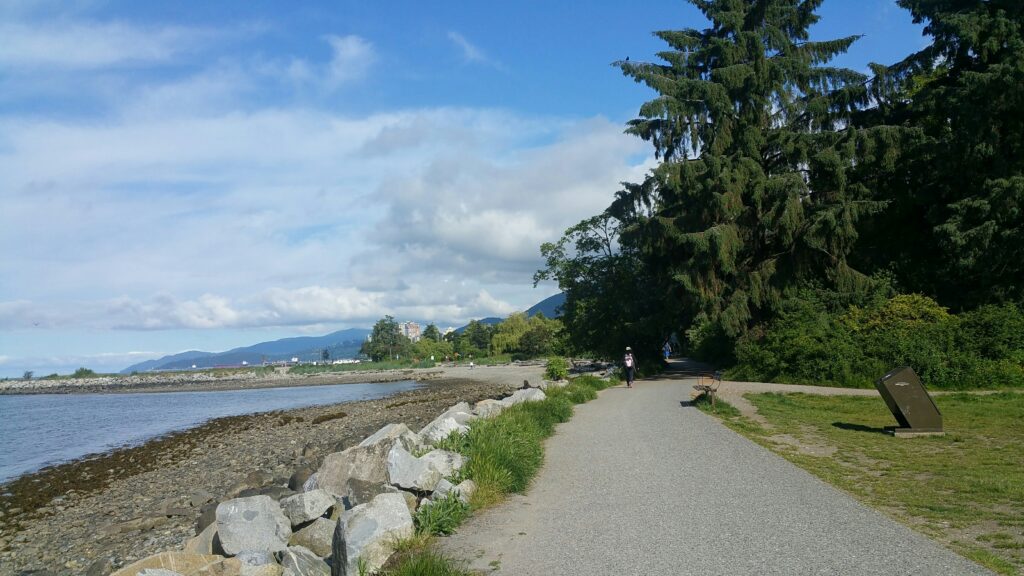
A few flat, senior-friendly routes worth knowing: the Stanley Park Seawall (paved, level, benches along the whole route), the Fraser River Trail (minimal elevation change, quieter than downtown parks), Trout Lake in John Hendry Park (a flat loop with shade), and Jericho Beach (flat paths, water views, solid footing off the sand).
What Should You Track for the Vet?
Log a short note after each walk, for example, “stiff getting up after 15 minutes, ate normally, slower than last week.” A specific pattern like this is more useful to a vet than trying to recall changes from memory weeks later.
Frequently Asked Questions
How much exercise does a senior dog actually need? Most senior dogs do well with 20-40 minutes total per day, split across two or more shorter walks. Dogs with significant arthritis may do better with several very short outings instead. Ask your vet to calibrate this to your specific dog.
My dog stops constantly to sniff, is that a problem? Usually not. It’s often just an older dog choosing a slower, more sensory pace, especially if they still seem curious and engaged rather than reluctant.
Should I stop walking my dog if they have arthritis? No. Consistent, gentle movement tends to help arthritic joints more than long rest periods, which can let joints stiffen further. Shorter, more frequent walks on flat ground is the better approach; confirm the right activity level with your vet.
What’s the difference between normal aging and a medical problem? Gradual change over months usually points to age. A sudden change over days, limping, heavy panting, or reluctance paired with other symptoms (appetite, breathing, bathroom habits) is worth a vet visit rather than waiting it out.
Is a private dog walker worth it for a senior dog specifically? Often, yes. A group walk moves at the pace of the fastest or most excitable dog in it, which isn’t ideal for a dog who needs to go slower and rest more. A one-on-one walk is built entirely around your dog, their pace, their breaks, their route.
If you’d rather hand this off, our private dog walks are built around exactly that, one dog, one walker, a route chosen for what your dog needs, not a schedule.